How to Use Selling Platform
The Selling Platform is XProxy's highest plan — designed for proxy businesses that need to generate, manage, and sell proxies with full control over bandwidth, quotas, authentication, and rotation.
Who is it for?
- Running a proxy reselling business.
- Creating shared proxies for multiple users.
- Controlling bandwidth, quotas, and connection limits per proxy.
- Setting whitelist/blacklist rules per proxy.
Features
- Generate multiple proxies from one dongle.
- Choose port type: HTTP, HTTPS, or SOCKS5.
- Choose IP type: IPv4 or IPv6.
- Set username/password or IP authentication per proxy.
- Set expiration date per proxy.
- Set rotation policy (manual, interval, API-triggered).
- Set custom DNS, max connections, whitelist/blacklist, bandwidth limits, and upload/download quotas per proxy.
- Monitor upload/download counters per proxy.
- Customizable proxy info templates for customers.
- XProxy Client API with per-proxy tokens for customer self-service.
Before you start
- Set a static IP for your XProxy server
- Configure NAT/DMZ for public access
- Enable dashboard authentication (General Settings → System Settings)
- Set up Dynamic DNS
Step 1 — Generate proxies
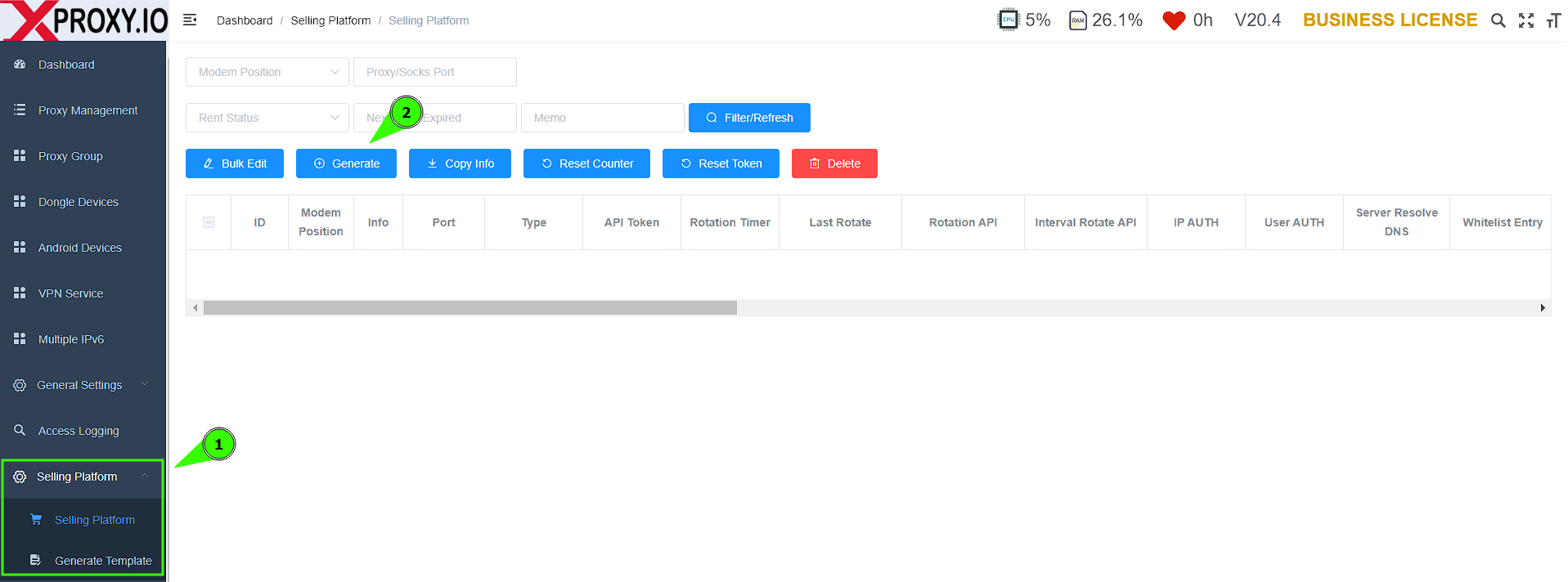
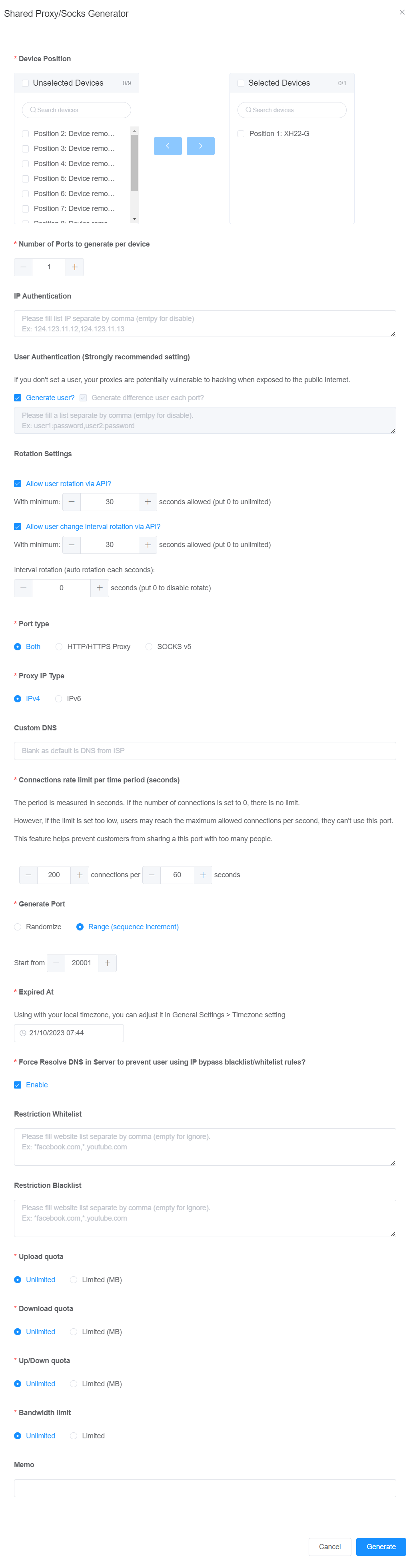
Go to the XProxy dashboard → Selling Platform → click Generate. Configure:
- Device Position — which dongle(s) to use.
- Number of Ports — 1 for dedicated proxy, 2+ for shared proxy.
- IP/User Authentication — same credentials for all, or unique per proxy.
- Rotation Settings — allow customer to request rotation or change interval.
- Port Type — HTTP/HTTPS or SOCKS5. IP Type — IPv4 or IPv6.
- Connection Rate Limit — max connections per second (0 = unlimited).
- Generate Port — Range recommended for easier management.
- Expired At — auto-close the proxy port on this date.
- Resolve DNS — enable if using whitelist/blacklist rules.
- Upload/Download Quota — daily, weekly, monthly, or total capacity limit.
- Bandwidth Limit — rate limit in Mbps.
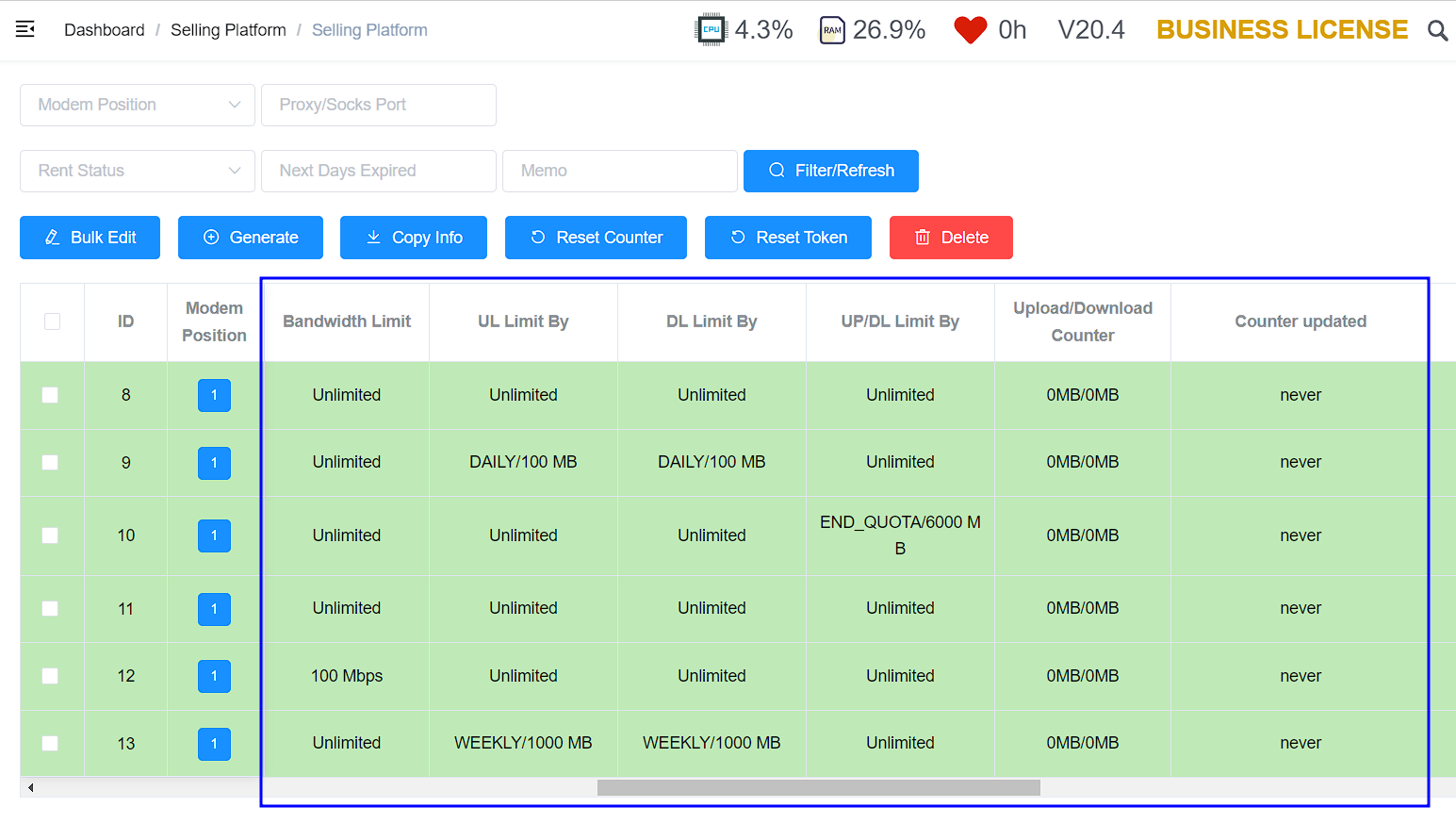
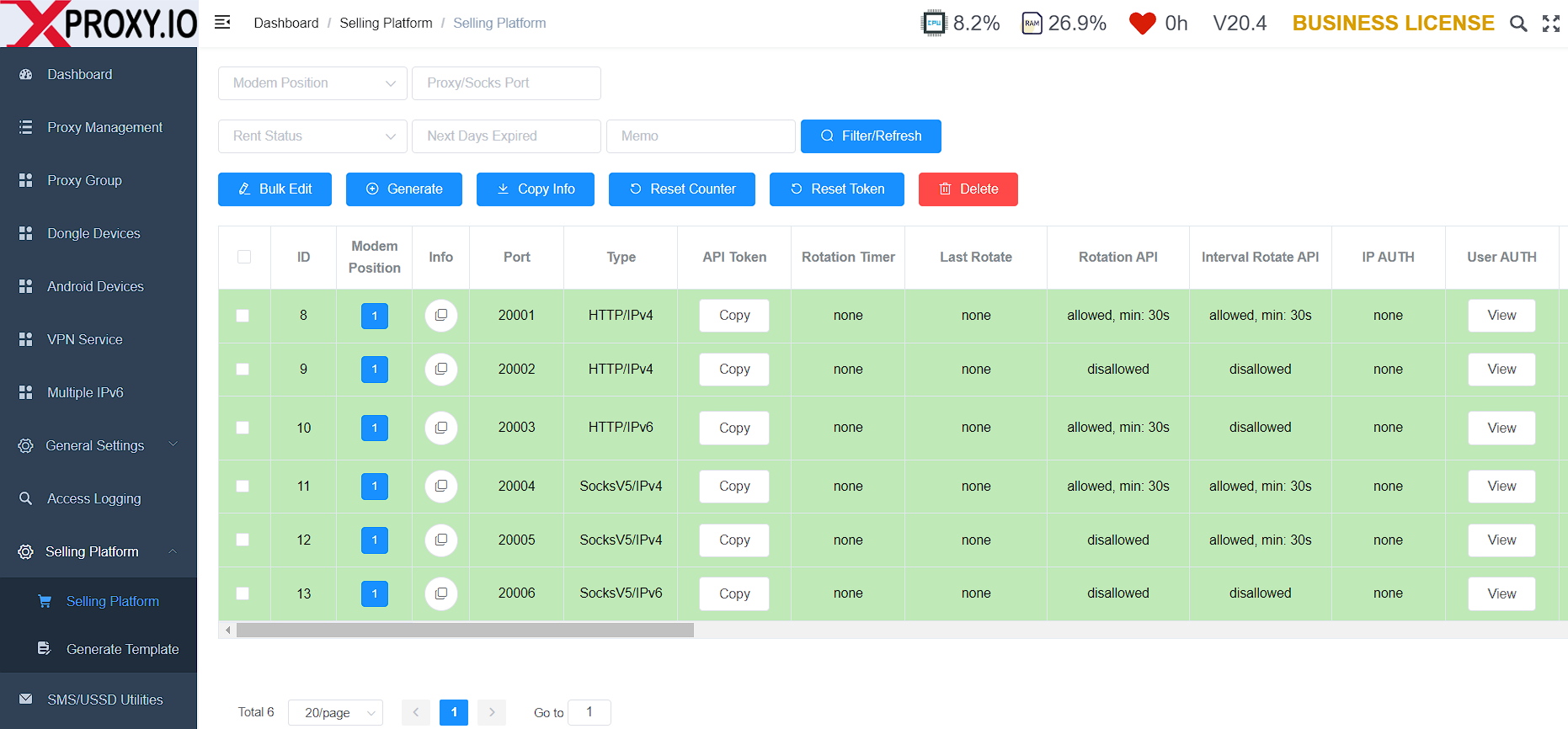
This is the list of selling proxies — you can monitor the Download / Upload counter of each proxy.
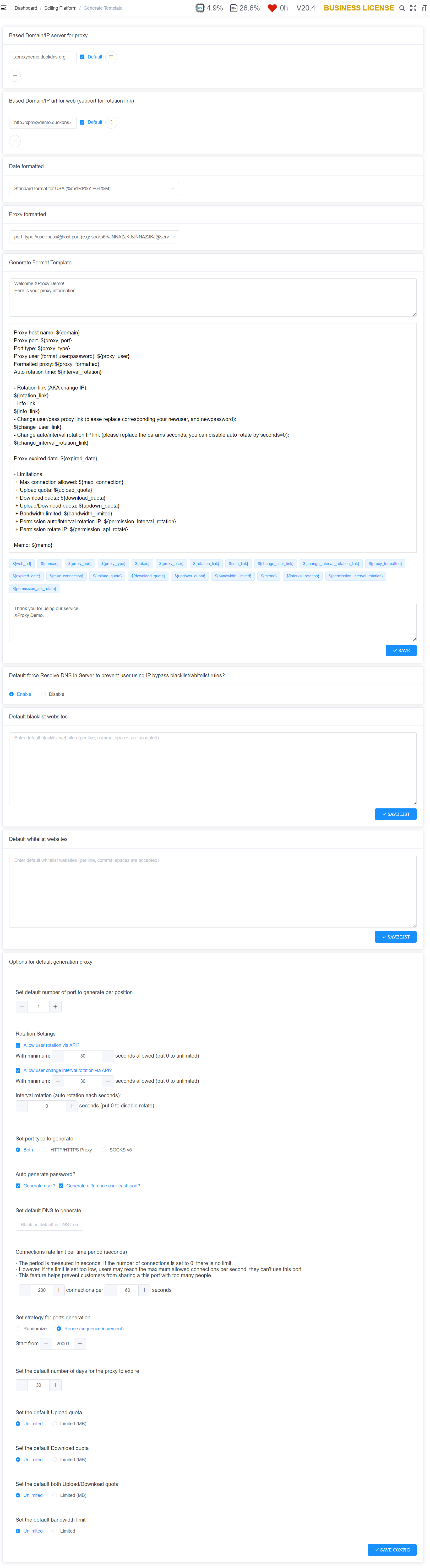
Step 2 — Configure the proxy template
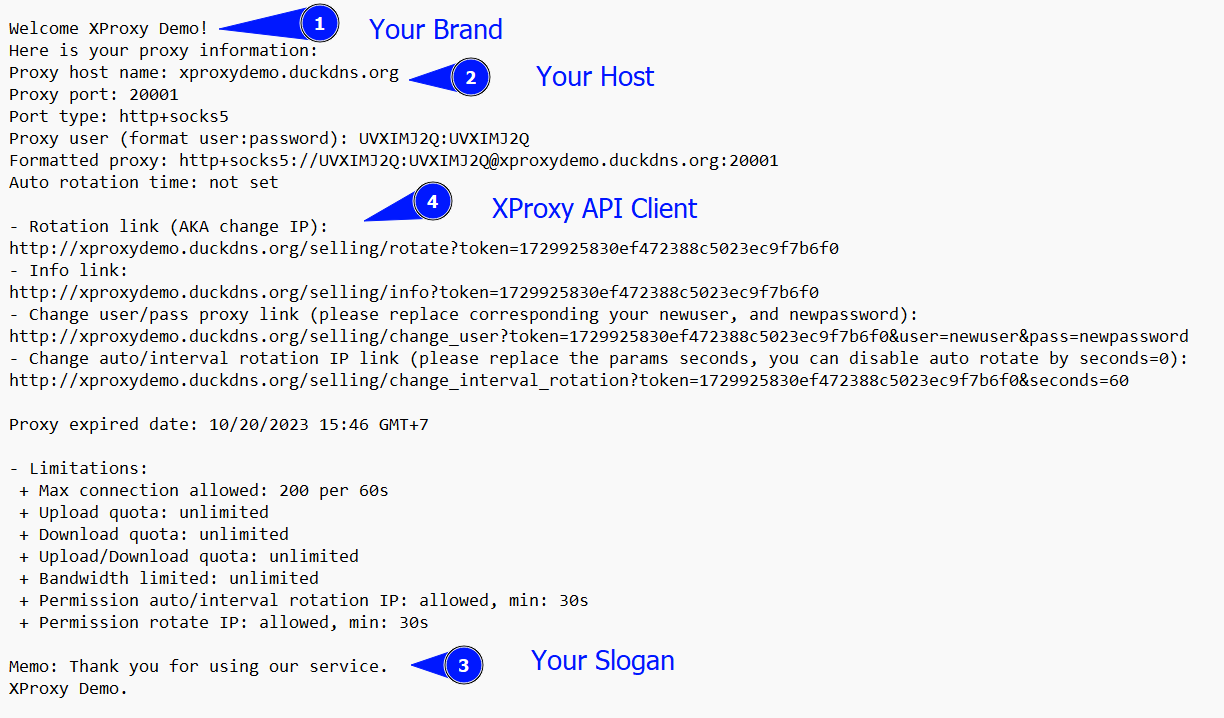
Go to Selling Platform → Generate Template. Set your brand name, proxy host, and the guide text sent to customers. The template uses your Dynamic DNS domain automatically.
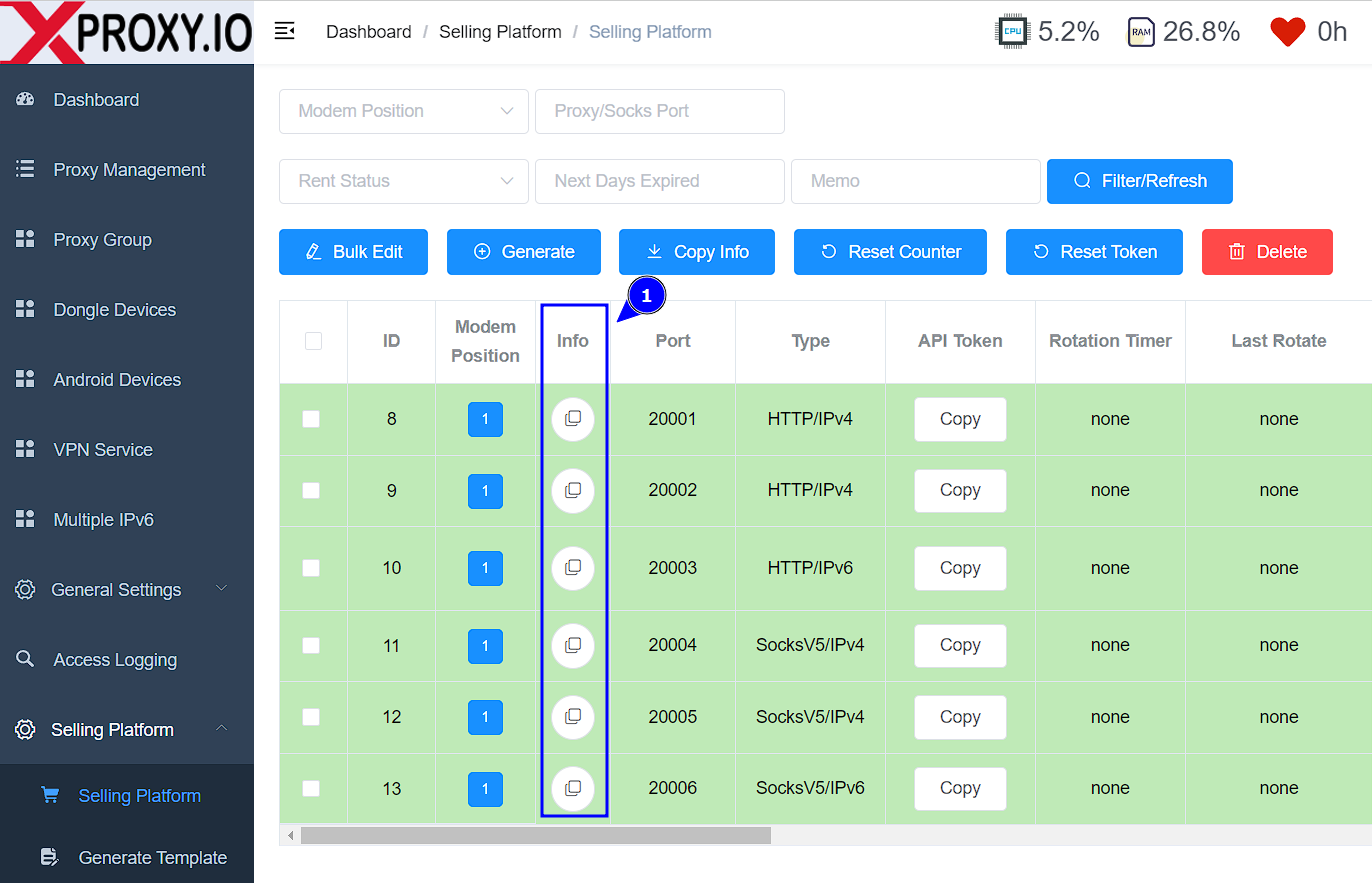
Step 3 — Send proxy info to customers
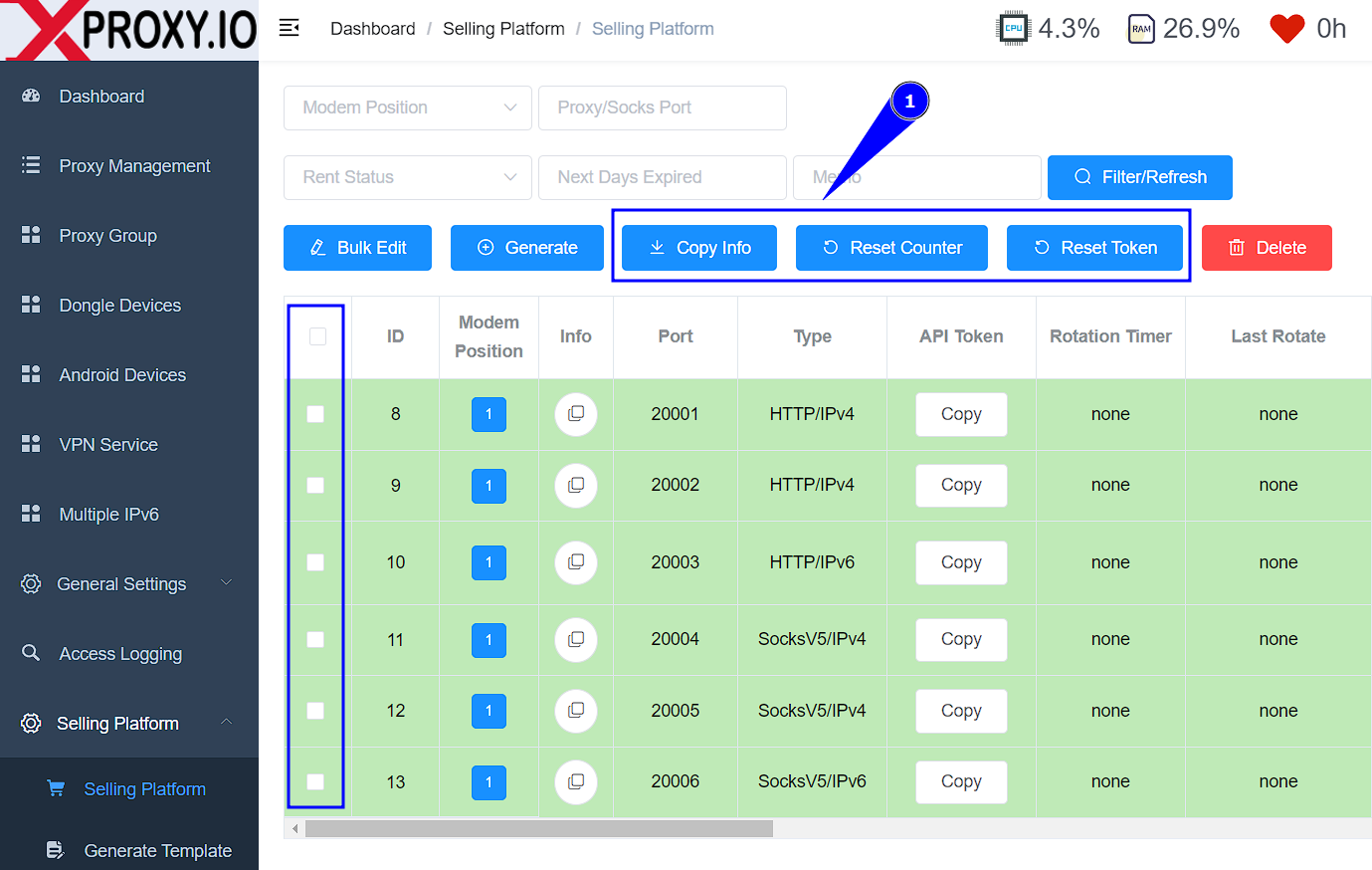
From the proxy list, click the copy button to export proxy details in your template format and share with customers.
This is the proxy information that will be sent to your customer:
XProxy Client API
Each generated proxy has a unique token. Customers can self-manage their proxy:
# Rotate IP
http://your-proxy-host/selling/rotate?token=TOKEN

# Get proxy info
http://your-proxy-host/selling/info?token=TOKEN

# Change username/password
http://your-proxy-host/selling/change_user?token=TOKEN&user=newuser&pass=newpassword

# Change auto-rotation interval (seconds=0 to disable)
http://your-proxy-host/selling/change_interval_rotation?token=TOKEN&seconds=60Upload / Download quotas
Quotas let you sell proxies by capacity — the proxy auto-closes when the customer uses up their allowance.
- Daily / Weekly / Monthly — resets at 00:00 each period (uses your server timezone).
- End of Quota — total lifetime capacity. When exhausted, the proxy closes and shows as expired.
- Quota can track Download, Upload, or Both.
- Use Reset Counter or Reset Token when transferring a proxy to a new customer.