NAT Forwarding — Use Proxy from Anywhere
By default, XProxy proxies are only accessible on your local network. This guide shows how to expose them to the internet using DMZ, secure the dashboard with a password, and set up Dynamic DNS so your domain stays stable even when your public IP changes.
Configure NAT via DMZ
Step 1 — Access your Router / Modem admin
The admin address and credentials vary by brand. See how to find your router admin.
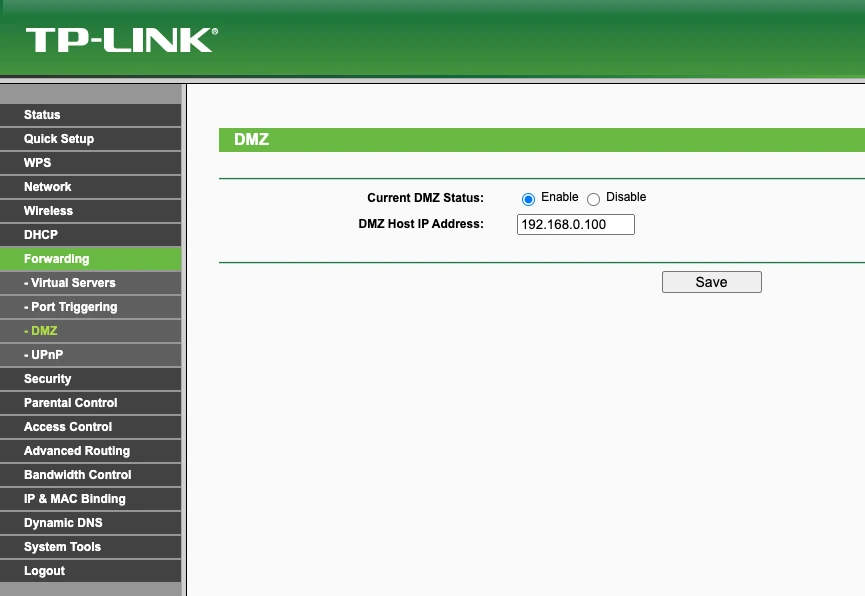
Step 2 — Enable DMZ
Go to Forwarding → DMZ (sometimes under Security settings), enable it, and enter the local IP of your XProxy server.
Secure the dashboard with a password
Once your XProxy server is publicly accessible, protect the dashboard with a password.
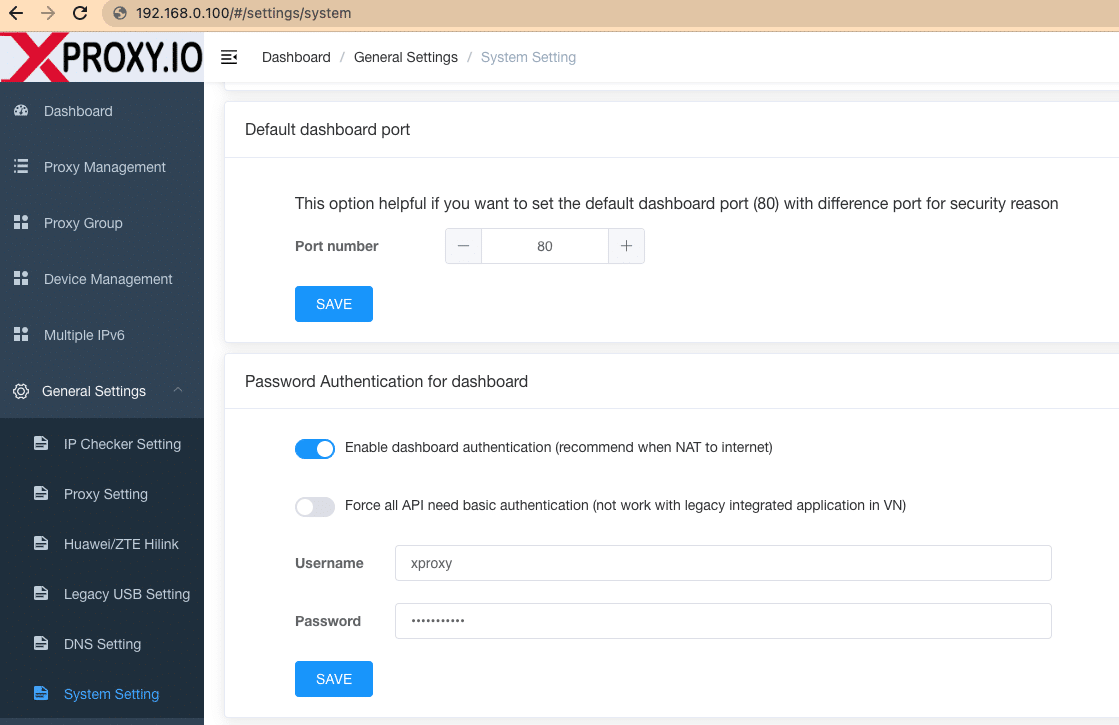
- Open the XProxy dashboard → General Settings → System Settings.
- In the Password Authentication for dashboard section, enable authentication and set a username and password.
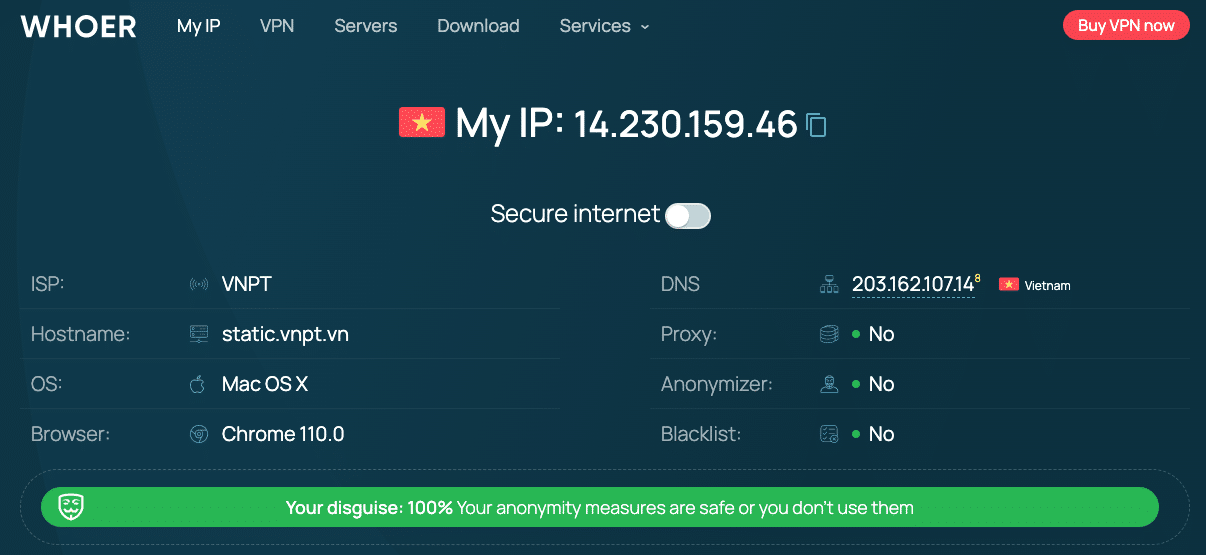
- Find your public IP at whoer.net.
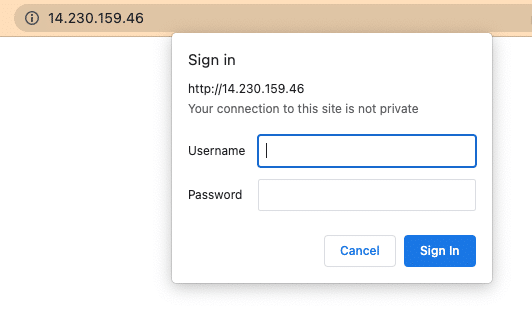
- Access the dashboard from anywhere using
http://<public-ip>— you'll be prompted for the credentials you just set.
Set up Dynamic DNS (DuckDNS)
Most home internet connections have a dynamic public IP that changes periodically. Dynamic DNS gives you a stable domain name that always points to your current IP.
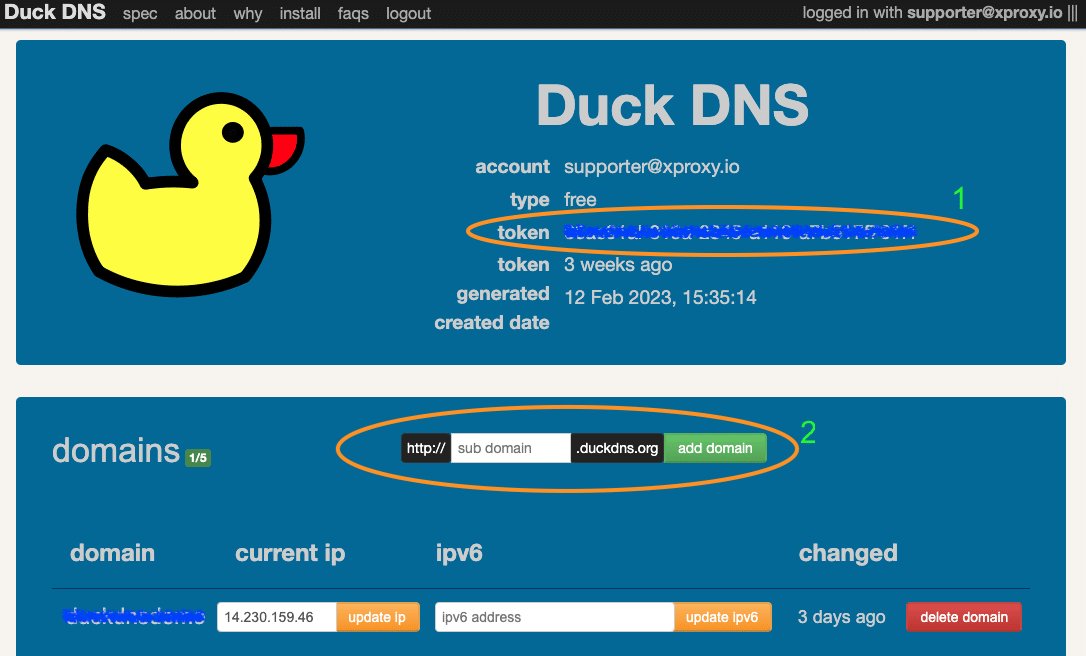
- Sign up at duckdns.org and copy your token.
- Create a subdomain (e.g.
myproxy.duckdns.org). - In the XProxy dashboard → General Settings → System Settings, enter your DuckDNS Token and Domain Name.
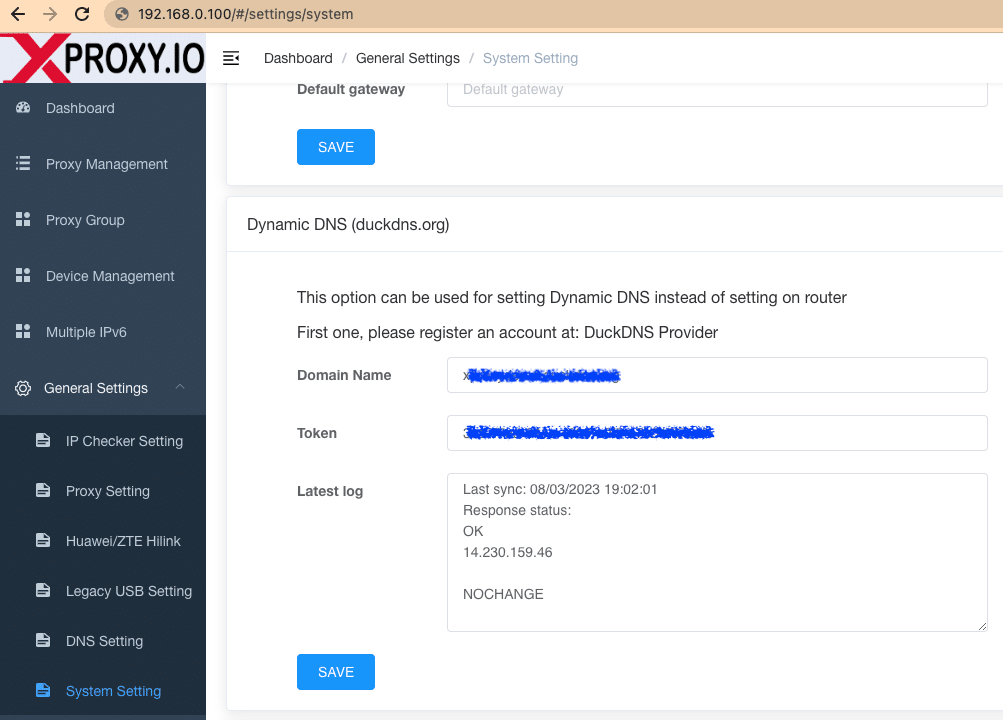
XProxy automatically updates the domain with your current public IP. You can now use the domain as the proxy host instead of an IP address.
http://myproxy.duckdns.org:4001 — stable even when your ISP changes your IP.