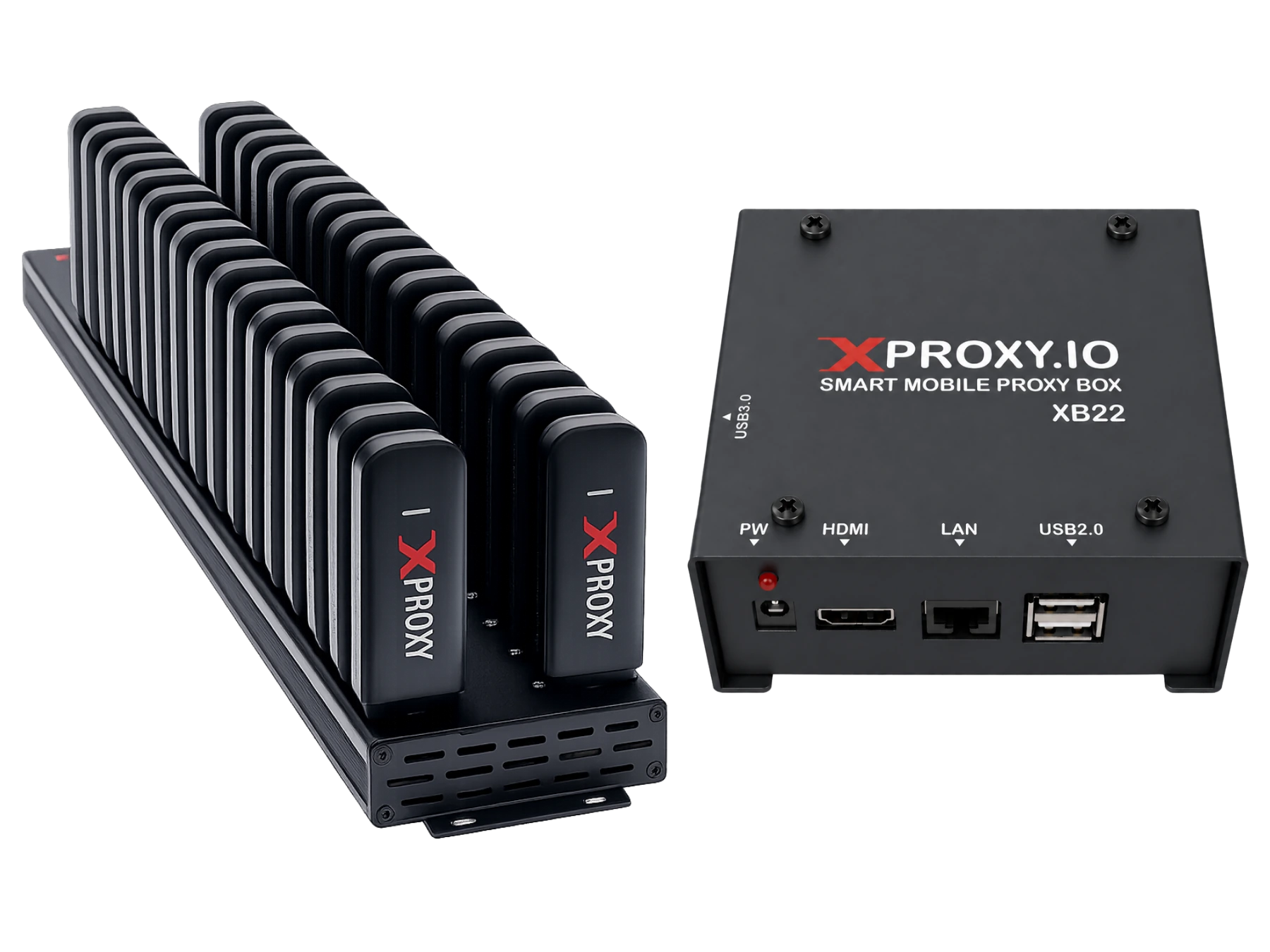
Python Requests와 XProxy 연동
HTTP 429/403 속도 제한 시 자동 IP 로테이션 트리거를 사용해 Python Requests 및 TLS 가장 curl_cffi 스크레이퍼를 XProxy 4G/5G 모바일 프록시로 라우팅하는 방법을 배웁니다.
Python Requests & curl_cffi와 함께 XProxy를 사용하는 이유
Python Requests와 curl_cffi(소켓 레벨에서 Chrome/Firefox TLS 지문을 모방)는 빠르고 가벼운 웹 스크래핑에 가장 널리 사용되는 라이브러리입니다. Python 스크립트를 XProxy 자체 호스팅 4G/5G 모바일 프록시로 라우팅하면 무제한 데이터 처리량으로 Cloudflare TLS 지문 검사와 IP 속도 제한을 우회할 수 있습니다.
사전 요구 사항
- 설치된
requests및curl_cffi가 있는 Python 3.8+(pip install requests curl_cffi). - 활성 4G/5G USB 동글 또는 Android 폰이 있는 XProxy 서버 실행 중.
- XProxy 대시보드의 프록시 자격 증명(IP, 포트, 사용자 이름, 비밀번호, 로테이션 API 링크).
1. 표준 Python Requests 예제
HTTP 429 또는 403 상태 코드 수신 시 XProxy IP를 자동으로 로테이션하는 전체 스크립트:
import time
import requests

# --- XProxy Configuration ---
PROXIES = {
    "http": "http://username:[email protected]:5001",
    "https": "http://username:[email protected]:5001",
}
ROTATION_API_URL = "http://192.168.6.7:8081/api/v1/rotate_ip/position/1"

def rotate_xproxy_ip():
    """Trigger 4G/5G cellular reconnection on XProxy."""
    print("🔄 Triggering XProxy IP rotation...")
    try:
        res = requests.get(ROTATION_API_URL, timeout=10)
        if res.status_code == 200:
            print("✅ IP rotation requested. Waiting 6 seconds for 4G reconnect...")
            time.sleep(6)
            return True
    except Exception as e:
        print(f"❌ Rotation error: {e}")
    return False

def scrape_url(url):
    for attempt in range(3):
        try:
            response = requests.get(url, proxies=PROXIES, timeout=15)

            # Handle rate limits or anti-bot blocks
            if response.status_code in (429, 403):
                print(f"⚠️ Encountered HTTP {response.status_code}. Rotating IP...")
                rotate_xproxy_ip()
                continue

            print(f"✅ Success ({response.status_code}): {response.text[:100]}")
            return response
        except requests.exceptions.RequestException as e:
            print(f"❌ Request error: {e}. Retrying with new IP...")
            rotate_xproxy_ip()

if __name__ == "__main__":
    scrape_url("https://api.ipify.org?format=json")
2. `curl_cffi`로 TLS 가장
XProxy 4G/5G 모바일 IP를 사용하면서 Cloudflare 및 Akamai TLS 지문 검사를 우회하려면 curl_cffi로 실제 Chrome 브라우저 TLS 서명을 스푸핑합니다:
from curl_cffi import requests

# Configure SOCKS5 or HTTP proxy with Chrome TLS impersonation
proxy_url = "socks5://username:[email protected]:5001"

response = requests.get(
    "https://tls.browserleaks.com/json",
    proxies={"http": proxy_url, "https": proxy_url},
    impersonate="chrome120",  # Impersonate Chrome 120 TLS fingerprint
    timeout=15
)

print("Status Code:", response.status_code)
print("TLS Response:", response.json())
자주 묻는 질문
- Q: Python Requests에서 HTTP와 SOCKS5 중 무엇을 사용해야 하나요?
A: 표준requests는 HTTP 프록시와 잘 작동합니다. Python Requests에서 SOCKS5를 사용하려면requests[socks]를 설치하세요(예:socks5h://user:[email protected]:5001).
Why High-Quality SOCKS5 UDP & Mobile Proxies Matter for Python Requests & Scrapers
Using cheap datacenter proxies or basic HTTP proxies in antidetect profiles leads to instant account suspensions on Facebook, Google, TikTok, and Amazon. Here is why XProxy's self-hosted 4G/5G mobile proxies deliver superior anonymity and trust:
- SOCKS5 with Full UDP Support: Unlike standard HTTP proxies that drop UDP packets, XProxy SOCKS5 proxies fully support UDP datagrams. This ensures WebRTC, DNS queries, and real-time audio/video sockets route securely through your proxy without revealing your real IP address.
- Instant REST API IP Rotation: Trigger cellular IP rotation on demand via simple HTTP GET requests (e.g.
http://192.168.6.7:8081/api/v1/rotate_ip/position/1). Reconnect 4G/5G USB modems in 3 to 8 seconds with zero proxy dropouts. - 100% WebRTC & DNS Leak Protection: Combined with XProxy's local LAN gateway and TCP OS Spoofing, your browser profiles maintain pristine anonymity scores on BrowserLeaks, Whoer, Pixelscan, and IPhey.
- Carrier-Grade NAT (CGNAT) Trust: Mobile carrier IPs are shared by thousands of active smartphone users. Major platforms never ban mobile IP ranges, granting your accounts maximum trust.
Stop Paying Monthly Rented Proxy Fees
XProxy hardware & software lets you own private mobile proxy channels with unlimited data, zero bandwidth caps, SOCKS5 UDP support, and instant REST API IP rotation (Python Scrapers).