
HTTP Proxy vs SOCKS5 Proxy: Architectural Differences
Selecting between HTTP and SOCKS5 proxies depends on your application layer requirements. HTTP proxies excel in lightweight web scraping, while SOCKS5 provides protocol-agnostic TCP/UDP relaying for antidetect browsers.
Key Architectural Differences
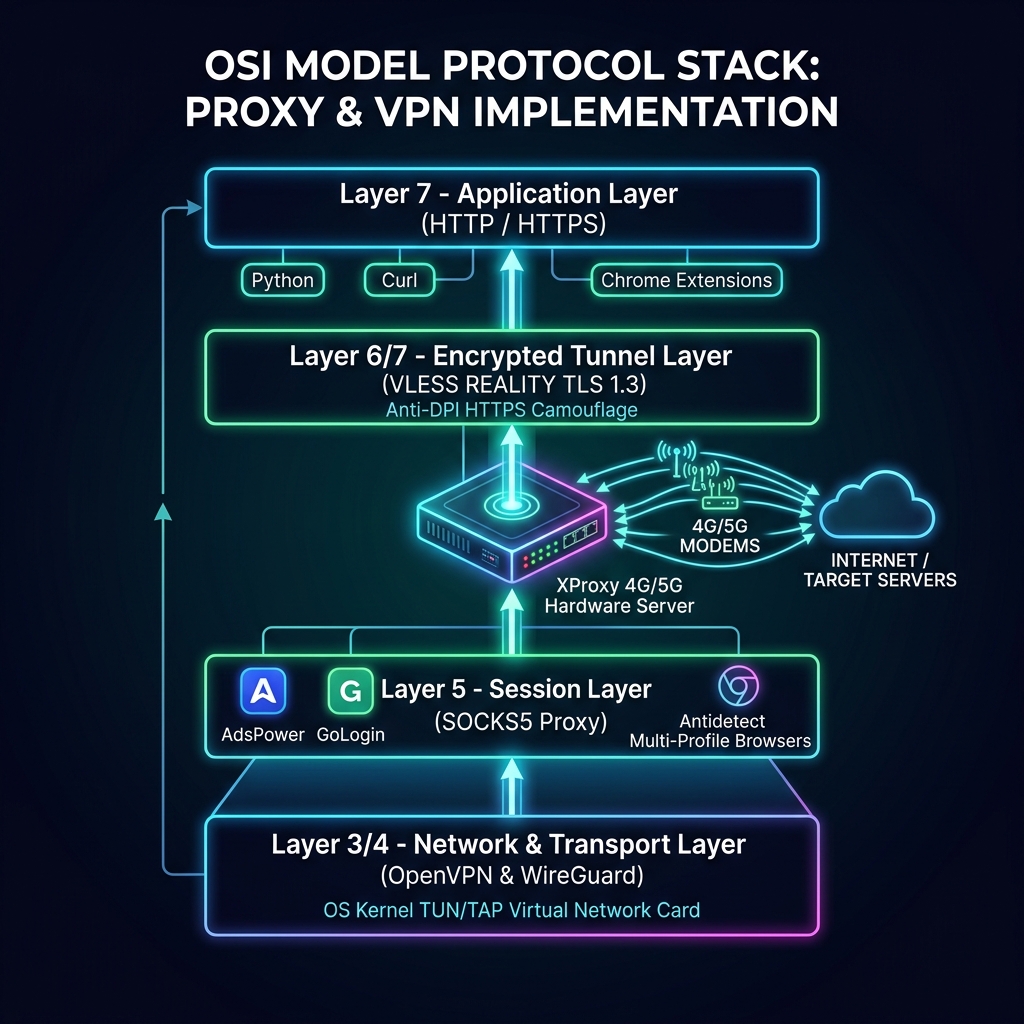
- HTTP Proxy (Layer 7 Application): Operates exclusively on HTTP/HTTPS traffic. Parses application headers and has the lowest memory footprint for automated web crawlers.
- SOCKS5 Proxy (Layer 5 Session): Relays raw TCP and UDP streams without inspecting or modifying application payloads. Standard protocol supported natively in all antidetect browsers.
- Header Security: Misconfigured HTTP proxies can inject headers... SOCKS5 relays clean TCP payloads without altering HTTP headers.
Use Case Decision Matrix
Use HTTP Proxy When:
- Writing Python
requests,scrapy, or Node.js scraping scripts. - Tooling only requires web GET/POST requests without full browser emulation.
- Formatting simple string credentials (
http://user:pass@ip:port) in CLI tools likecurl.
Use SOCKS5 Proxy When:
- Configuring Antidetect Browsers (AdsPower, GoLogin, Multilogin, Hidemyacc).
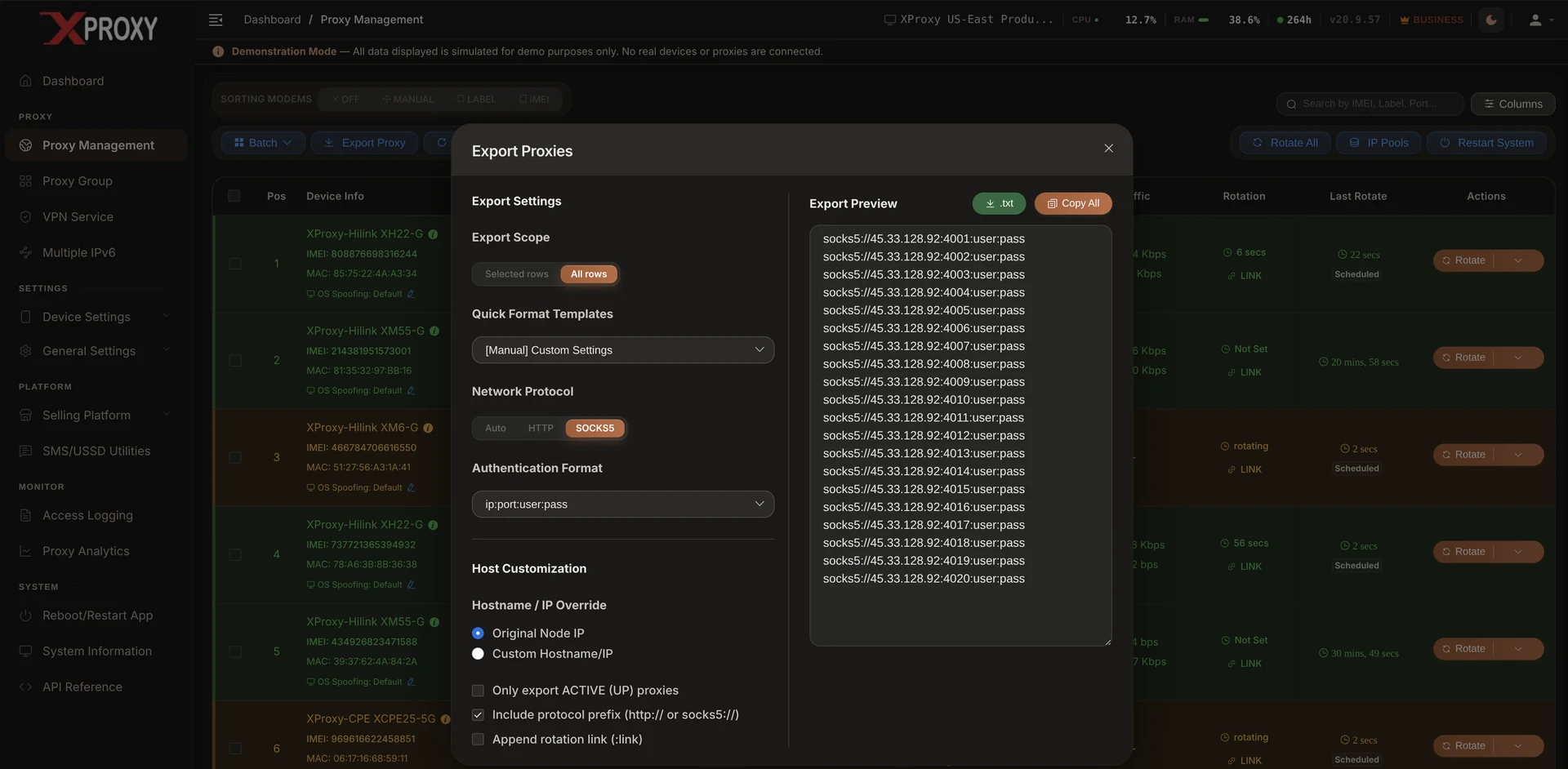
- Handling WebSockets, WebRTC, FTP, or custom TCP/UDP socket traffic.
- Ensuring zero proxy header injection to maximize profile account longevity.
XProxy Dashboard Export Interfaces
HTTP Proxy Export Configuration
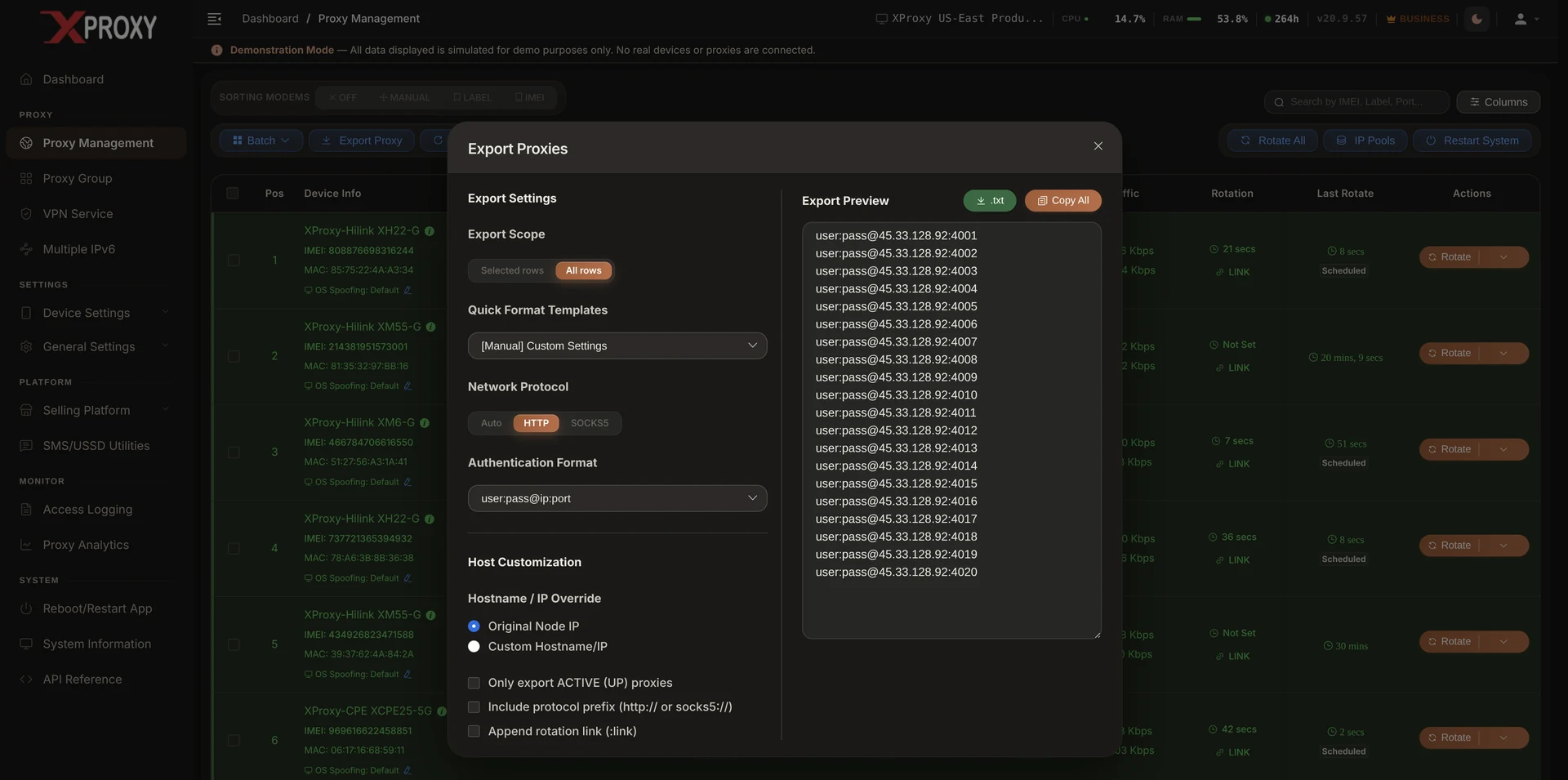
SOCKS5 Proxy Export Configuration (UDP ASSOCIATE Enabled)
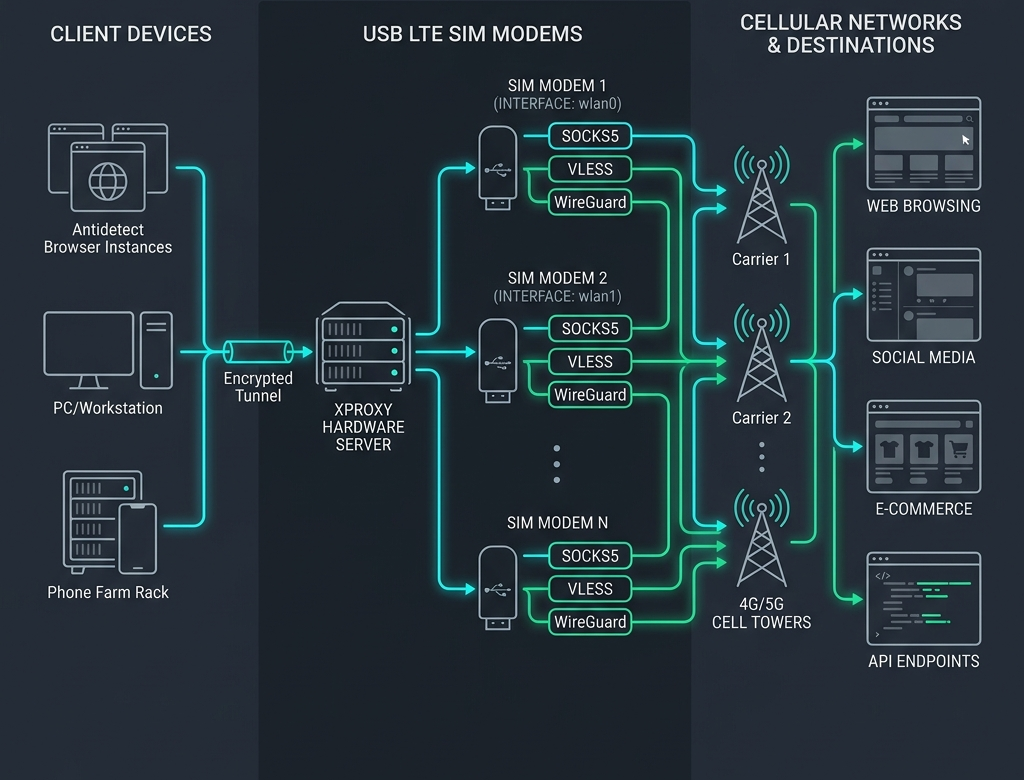
How It Works: Hardware Routing & Per-SIM Modem Protocols
XProxy provisions dedicated protocol endpoints per 4G/5G SIM modem interface out-of-the-box. Each modem plugged into XProxy gets its own isolated HTTP port, SOCKS5 port, and WireGuard TUN configuration, ensuring clean IP isolation per modem.
OSI Layer Representation: Layer 7 HTTP vs Layer 5 SOCKS5
Visual representation of protocol operating layers in network stack.
Provision HTTP & SOCKS5 Endpoints Per SIM Modem
Deploy dedicated 4G/5G mobile proxies with dual HTTP and SOCKS5 endpoints out-of-the-box.
